
Initiating Relationships with Indigenous Entities Blog Post
Written by Haiwee Fredericks, CWI's Summer 2026 Institute for Tribal Environmental Professionals (ITEP) Air Quality Intern


At the root of everything, be it the food on your plate or the screen you’re reading this on, relationships guide all things in existence across time. Whether we like it or not, our future is something we will enter into together. Entering into relationships with Indigenous entities creates a path towards a regenerative future built on accountability. What goes into developing a relationship with an Indigenous entity in the context of environmental conservation based in California?

INTENTIONS
Regardless of whether one is conscious or inattentive, intention evolves into choices, actions, and ultimately results. Before initiating a relationship with an Indigenous entity, there needs to be critical internal reflection.
When comprehending intentionality in relationships, forms of symbiosis present great examples.
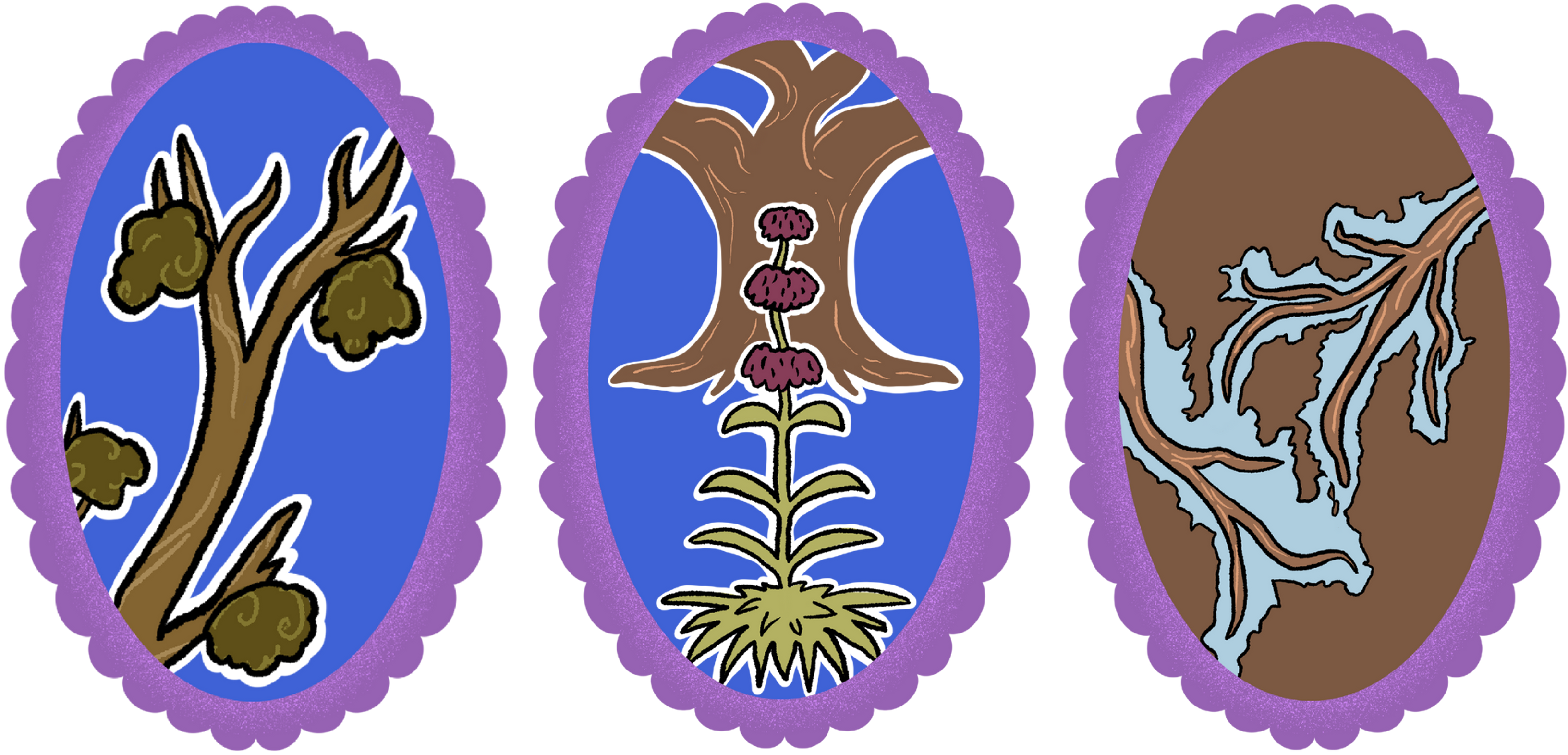
Parasitism, only one benefits while the other is harmed (mistletoe on conifer trees)
Commensalism, one benefits while the other isn’t harmed but doesn’t benefit (hummingbird sage and coast live oak)
Mutualism, both parties benefit (mycorrhizae and tree roots)
These plant examples provide a good visual to comprehending how relationships form through different intentions guiding their situation. Entering a relationship with an Indigenous entity with complimentary intention in mind provides a favorable foundation for a worthwhile outcome. Those that thrive have a favorable foundation, such as plants, buildings, or in this case, relationships.
What's building the foundation of the relationship you're entering? What is the motivation to enter into a relationship? Relationship building isn’t something that can be taken lightly, rather it should be viewed as world building, understanding the potential, and foraging for a future to flourish. However relationships evolve will guide future decisions with opportunities and obstacles. In the realm of non-profit organizations on the grant cycle treadmill, is there a plan to continue this relationship past a grant cycle? Who and how will the next person in your role take up this responsibility? As expressed by Don Hankins, The Stewardship Project Co-Lead, at the end of the day, Indigenous peoples are here to stay.
After one LOOKS inward, subsequently, internal learning should take place. Indigenous entities shouldn’t be approached with the anticipation of them to teach, rather one should come prepared to listen to their perspectives.

PREPARATIONS
Place-based Indigenous identities
Every Indigenous Nation has their own creation history which places them within their homelands. These creation histories are also recognized as creation stories, or by older generations as myths, but they are our histories. Indigenous creation histories provide a framework for how to live, most importantly reminding us of our responsibilities.
Every Indigenous entity has faced challenges impacting their abilities to practice their responsibilities. Within California these challenges vary per region and per Indigenous entity. Within California there are 109 federally recognized tribes and the California Native American Heritage Commission hosts a tribal consultation list. Due to a variety of reasons, the land bases of Indigenous entities aren’t always within their ancestral homelands. It’s important to review how Indigenous gathering spaces came to be, specifically of those you’re working with. Additionally, consider the fluidity – water, air, land – they all move, just as people. There are overlapping ancestral geographies; places of intertribal gathering, trade networks, and other places of cultural significance.

Communication development
The relationship you’re wanting to grow will help guide your communication development. There are a few things to take into account when considering your options of communication such as shifting leadership, and ancestral geographies.
Politics are politics, and jobs are jobs, there is always a possibility of shifting positions. Sara A. Clark, The Stewardship Project Co-Lead, recognizes that there is potential in leadership changes such as tribal councils. In the possibility of this occurring, priorities might shift based on the change of leadership.
When considering overlapping ancestral geographies Don Hankins recognizes the importance of partnership, specifically intertribal groups such as the Owens Valley Indian Water Commission, serving as a united voice advocating for water rights on behalf of multiple tribes in the Owens Valley. Through communicating with intertribal groups there is a possibility of alleviating the capacity of tribal governments while having the ability to provide more perspectives based on their multi-tribal background. The most important thing is considering who the ancestral caretakers are, regardless of their recognition status. Indigenous entities have the inherent right to exercise their sovereignty outside of their federally recognized status.

LEADING BY EXAMPLE
The Climate and Wildfire Institute is in partnership with the The Stewardship Project (TSP). TSP is Co-lead by Scott Stephens, Don Hankins, Sara A. Clark, and James Puerini. Together TSP develops policy recommendations that align with tribal sovereignty of traditional stewardship on ancestral lands. The primary role of CWI in this partnership is to help facilitate meetings and provide their expertise when appropriate.
In the realm of fire policy, TSP is a champion of fire policy recommendations and
advocacy to better serve the needs of cultural fire practitioners. In California, since time immemorial Indigenous peoples have been tending the land in a variety of ways including utilizing fire. With onset of colonial occupation, beneficial fire has systematically been oppressed. In recent years there have been policies to support tribes in exercising their inherent fire sovereignty such as SB310. SB310 provides the ability for the California Natural Resource Agency and local air districts to enter into formal cultural burn agreements with federally recognized tribes in California– lifting the burden from individual cultural fire practitioners. Today TSP is endorsing bills such as the Wildfire Emissions Prevention Act which aims to expand the Exceptional Events Rule within the Clean Air Act to include prescribed fire and explicitly includes tribes by recognizing that prescribed fire includes cultural fire activities.
Recently, Sara A. Clark brought my attention to the work of TOGETHER Bay Area, specifically their Right Relations program. I had the opportunity to talk with Annie Burke, TOGETHER Bay Area Executive Director. She walked me through the timeline of TOGETHER Bay Area and how the Right Relations program came to fruition. The Right Relations program is co-designed and co-led by Redbud Resource Group, an intertribal group. There have been 150 participants representing 32 organizations who all commit to taking action which participants defined themselves. Through online training, in-person field trips, and conversations with Native leaders, participants learn the impacts of colonization and how they can support tribal sovereignty.

CONCLUSION
Entering into the future must include productive relationships with Indigenous entities. Understanding one's intentions through internal reflection followed by self-initiated learning gives way to creating favorable foundations for a relationship to form. Organizations such as the Climate and Wildfire Institute and TOGETHER Bay Area exemplify respectful and meaningful relationships with Indigenous entities. When these relationships are created they support in fulfilling the responsibilities of Indigenous peoples– from time immemorial to a future incomprehensible to us.

Written by Haiwee Fredericks
CWI's Summer 2026 Institute for Tribal Environmental Professionals (ITEP) Air Quality Intern


